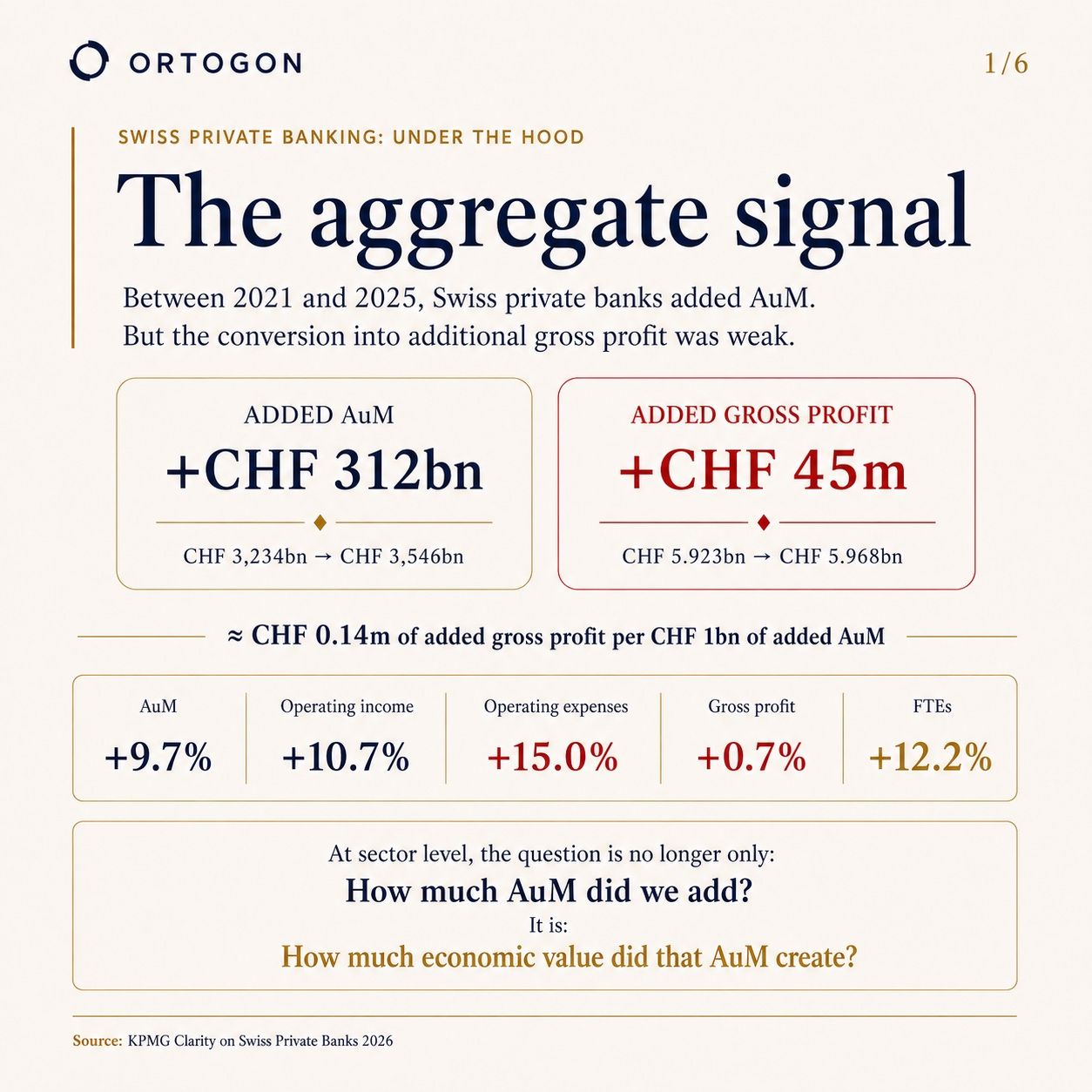
Swiss private banks have increased their AuM, but the conversion of those assets into additional profit has been weak. The next question is therefore not only how much AuM the sector added, but through what system those assets were acquired, served, priced, controlled and monetized.
Looking beneath the aggregate figures, the picture differs markedly by bank size. Large banks have scale, but the impact of additional assets on profit remained limited. Medium-sized banks grew AuM strongly, yet profitability did not follow in the same proportion.
Small banks were the outlier in the 2021–2025 data. They were the only size cluster in which income grew much faster than costs, producing a stronger effect on profit.
This does not establish that smaller banks are inherently better. It establishes something more useful: the same amount of AuM can have very different economics depending on the operating model that manages it.
An AuM book can create value in one institution and consume value in another. The difference lies in acquisition cost, cost-to-serve, pricing discipline, compliance and control burden, platform scalability, depth of the relationship and client lifetime value.
The composition of the assets also matters. Existing-client consolidation, low-margin custody assets, strategically priced relationships and assets with strong lending or mandate potential may all carry the same headline AuM but produce very different revenue and cost profiles.
The executive discussion should therefore move away from undifferentiated asset growth. Growth should be assessed by the economic quality of the assets added and by the extent to which the platform can serve them without proportional increases in cost and complexity.
For boards, the question is not only whether the bank is growing. It is whether growth improves long-term profitability, operating leverage and viability.
The opportunity lies both in extracting more value from the AuM already served and in applying greater discipline to the assets the bank chooses to add next.