Swiss pension funds have represented only around 8% of Swiss venture capital in recent years.
It is tempting to interpret this simply as limited institutional appetite.
Avenir Suisse points to a more structural explanation:
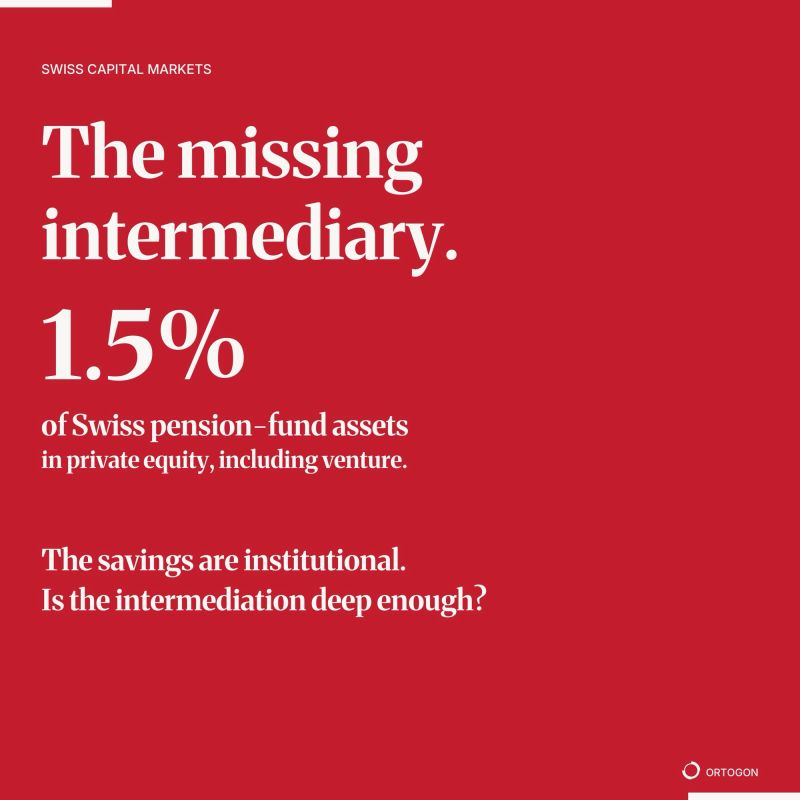
Venture and private-equity investments require specialist expertise, remain illiquid for long periods and carry higher administrative costs. Private equity, including venture capital, represented only 1.5% of Swiss pension-fund assets in 2024.
Those constraints are economically understandable. They also highlight the importance of what sits between institutional savings and individual companies.
A deep capital market requires specialist intermediaries capable of underwriting difficult productive risks and packaging them into professionally governed, diversified investment exposures: growth-equity managers, late-stage venture funds, specialist private-credit platforms, sector experts and lead investors.
The Swiss Scale-Up Report points to limited domestic capacity at precisely this stage, particularly for large growth rounds.
That makes the intermediation question central:
Does Switzerland have sufficient specialist investment capacity between its institutional savings and the productive risks generated by its innovation economy?
Pension-fund allocation may tell us as much about the depth of that intermediary layer as it does about pension funds themselves.