Ownership & Succession

An Exit Clause Needs a Funding Plan

A shareholder agreement can document an exit without making it genuinely liquid. The practical questions are who will buy, how much can leave, when the price is set and when the seller actually receives cash. A credible exit mechanism therefore requires a credible funding mechanism.

Observation • Ownership & Succession • Nov 5, 2026

An Exit Clause Needs a Funding Plan

A shareholder agreement can document an exit without making it genuinely liquid. The practical questions are who will buy, how much can leave, when the price is set and when the seller actually receives cash. A credible exit mechanism therefore requires a credible funding mechanism.

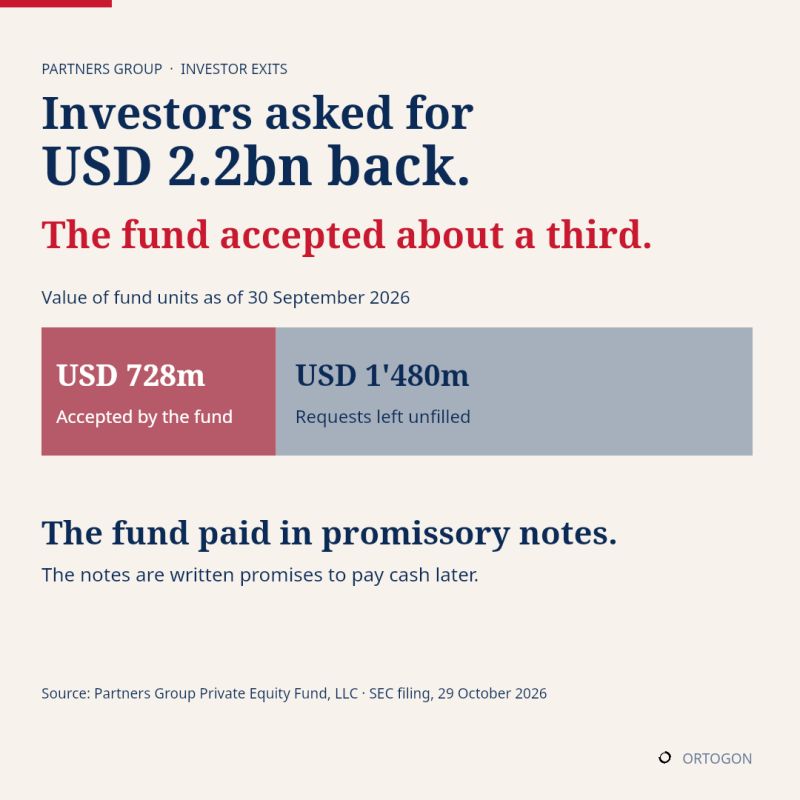
Investors asked for USD 2.2bn back; the fund accepted about a third and paid in promissory notes, written promises to pay cash later.

When did you last read the exit clause in your shareholders' agreement?

Partners Group US private equity evergreen fund saw tenders of about USD 2'209m for the offer valued on 30 September 2026. It accepted USD 728m, equal to 5% of NAV, on a pro rata basis. Settlement was in promissory notes held by the administrator.

In family and SME shareholder agreements, "liquidity" is often assumed and rarely specified.

Three questions do the real work:

  • Who is expected to buy, and with what funding?
  • How much can leave in a period, and when is the price set?
  • When does the seller actually receive cash?

A documented exit needs a credible funding plan.

How do you test that in your own agreements?

Source: Partners Group Private Equity Fund, LLC, SEC Schedule TO-I/A (final amendment), 29 October 2026 (valuation date 30 September 2026).