
For decades, we’ve treated strategy, governance, processes and, more recently, AI as separate disciplines.
In practice, they all depend on something more fundamental: how an organization reasons.
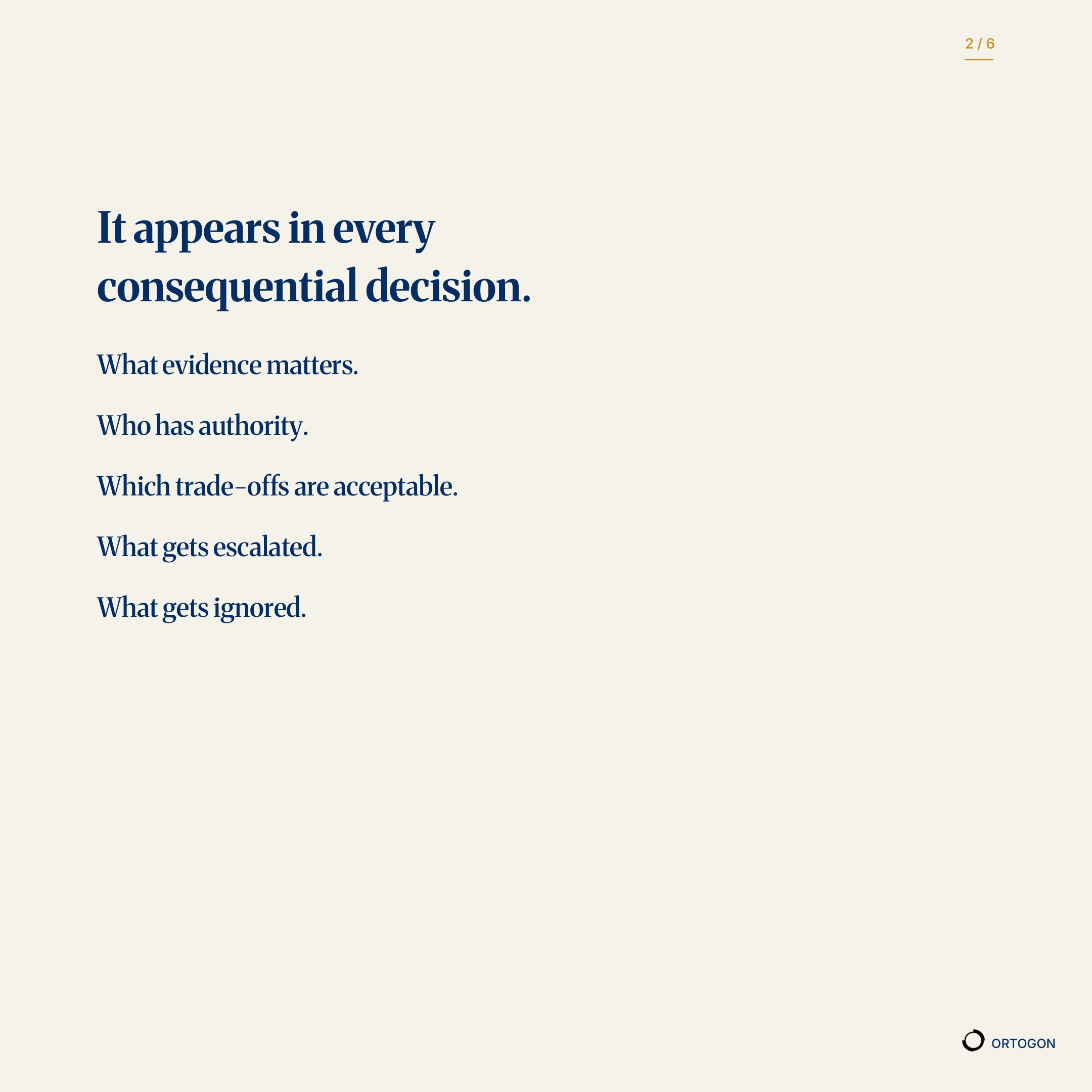
Every organization has an implicit logic that determines:
- what evidence is trusted
- who gets to decide
- which trade-offs are acceptable
- what gets escalated
- how experience shapes future decisions
Most of that logic exists only in people’s heads.
As organizations become more complex and as AI begins participating in decisions, that implicit reasoning becomes a strategic constraint.
Technology doesn’t create better decisions.
It amplifies the decision logic that already exists.
If that logic is inconsistent, opaque or contradictory, AI will simply make those problems scale faster.
I believe this hidden layer deserves its own discipline.
Organizational reasoning.
The discipline of making an organization’s decision logic visible, testable and improvable.
Over the coming months, I’ll explore how organizational reasoning can be mapped, measured and strengthened.
But also why it may become one of the defining capabilities of AI-native organizations.